
Morocco’s major cities—with their bustling medinas, vibrant souks, and rich cultural attractions—deserve the deep exploration that most travelers dedicate to them. Yet sometimes the most rewarding travel experiences come from breaking away from these urban centers to discover the extraordinary diversity that lies just beyond. Whether you’re an expat living in Morocco seeking weekend refreshment, a business traveler with a few extra days, or a tourist looking to maximize your Moroccan experience, these carefully crafted 3-day escapes from major cities open doors to landscapes and cultural experiences you might otherwise miss. At Kasbah Transfers, we’ve spent years helping travelers discover these perfect weekend getaways, and today we share our expert recommendations for making the most of a short break from Morocco’s major urban centers.
From Marrakech: The High Atlas and Valleys
Why Escape Marrakech?
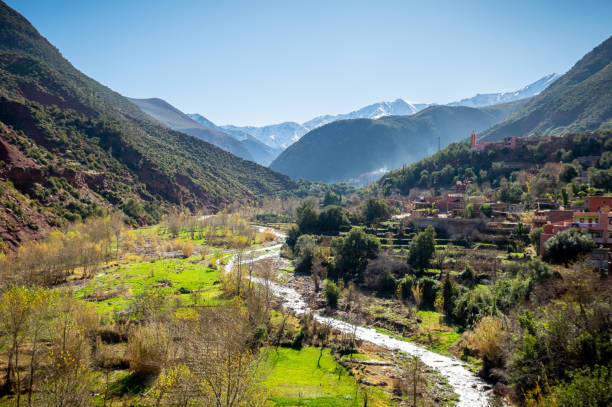
Marrakech’s sensory intensity—the constant motion of Jemaa el-Fnaa, the labyrinthine medina, the calls of vendors and scent of spices—creates an exhilarating but sometimes overwhelming experience. The perfect antidote lies just an hour’s drive away, where the High Atlas Mountains offer cooler temperatures, spectacular scenery, and a completely different pace of life.
Day 1: Into the Mountains
Morning: Depart Marrakech after breakfast, heading south toward the High Atlas. The landscape transforms dramatically as you leave the plains surrounding the city and begin climbing into increasingly mountainous terrain. Make your first stop at Asni, a busy market town especially lively on Saturdays when local Berbers bring produce and crafts to sell.
Continue to Imlil, the trailhead village that serves as the gateway to Mount Toubkal (North Africa’s highest peak). Here, vehicles can go no further, creating a peaceful atmosphere free from traffic noise. Check into a mountain lodge or traditional guesthouse, many offering spectacular valley views.
Afternoon: After lunch, embark on an easy acclimatization hike through terraced fields and walnut groves to surrounding villages like Aroumd or Tamatert. These short walks offer stunning vistas without requiring serious trekking experience. Notice how the traditional earthen architecture blends harmoniously with the landscape, creating a perfect symphony of human adaptation to mountain environments.
Evening: Return to your accommodation for a traditional Berber dinner featuring mountain specialties like savory tagines slow-cooked with local vegetables and perhaps mechoui (slow-roasted lamb). Many lodges offer rooftop dining with panoramic views of alpenglow on surrounding peaks—a perfect end to your first day away from urban intensity.
Day 2: Valley Exploration
Morning: Begin with an invigorating mountain breakfast before setting out for deeper exploration of the High Atlas. For those enjoying physical activity, numerous well-marked hiking trails suit various fitness levels. Guides can be arranged through your accommodation, providing not just navigation but cultural interpretation of the landscape and villages you’ll encounter.
For less active travelers, a visit to nearby Berber villages offers cultural insights without demanding hikes. Many communities welcome respectful visitors, providing glimpses into mountain life that has adapted to modern influences while maintaining distinctive traditions.
Afternoon: After a picnic lunch in a scenic location, visit a traditional Berber home where families often welcome guests for tea ceremonies. These encounters offer authentic cultural exchange beyond typical tourist experiences, particularly when facilitated through connections with responsible local guides.
Evening: Return to your accommodation for dinner, perhaps followed by traditional music if your lodge offers cultural programs. The profound silence of mountain nights, broken only by distant streams or occasional village sounds, reminds you just how far you’ve traveled from Marrakech’s constant energy.
Day 3: Ourika Valley and Return
Morning: Check out after breakfast and begin a scenic drive through the Ourika Valley. This lush region follows the course of the Ourika River, creating a green corridor through otherwise arid landscapes. The valley’s numerous riverside restaurants make perfect coffee stops with tables set directly over the flowing water.
Continue to Setti Fatma, known for its seven waterfalls. A moderate hike reaches the first waterfall in approximately 30 minutes, while more energetic travelers can continue to higher cascades. Local guides help navigate the sometimes challenging trail while sharing insights about local plants and traditions.
Afternoon: Enjoy lunch at a riverside restaurant before beginning your return journey to Marrakech. The drive back offers spectacular views as you descend from mountains to plains, with the transition from cool mountain air to Marrakech’s warmth marking your return to urban Morocco.
Arrive in Marrakech by late afternoon, refreshed and carrying memories of mountain tranquility that will enhance your appreciation of the city’s vibrant energy.
Where to Stay
The High Atlas offers accommodation ranging from simple guesthouses to sophisticated lodges:
- Kasbah du Toubkal: Award-winning sustainable lodge with extraordinary views and excellent cultural programs
- Dar Imlil: Traditional guesthouse with comfortable rooms and authentic Berber hospitality
- Douar Samra: Charming family-run guest house with homestyle cooking and traditional decor
For those seeking luxury without sacrificing authenticity, Richard Branson’s Kasbah Tamadot provides five-star comforts while maintaining strong connections to local culture.
Best Time to Visit
The High Atlas makes a perfect year-round weekend escape with each season offering different attractions:
- Spring (March-May): Wildflowers, flowing streams, and moderate temperatures perfect for hiking
- Summer (June-August): Significantly cooler temperatures than Marrakech, making it ideal refuge from urban heat
- Fall (September-November): Clear skies, perfect visibility, and beautiful autumn colors
- Winter (December-February): Occasional snow creates magical landscapes, with cozy lodge fireplaces providing perfect evening ambiance
From Fez: Moulay Idriss and Roman Ruins
Why Escape Fez?
Fez’s medieval medina—the world’s largest car-free urban area—offers unparalleled cultural immersion but can create sensory and navigational overload after several days of exploration. The perfect weekend escape takes you to the nearby sacred town of Moulay Idriss and the remarkable Roman ruins of Volubilis, offering historical perspective and a gentler pace.
Day 1: Sacred History and Roman Grandeur
Morning: Depart Fez after breakfast for the approximately one-hour drive to Moulay Idriss, a town of profound religious significance spread dramatically across two hillsides. Named for Morocco’s most revered saint who brought Islam to the country and founded its first dynasty, this pilgrimage site remained closed to non-Muslims until the mid-20th century.
Explore the compact town center with its distinctive conical minaret (the only round minaret in Morocco) and soak in panoramic views from various terraced viewpoints. While non-Muslims cannot enter the actual shrine, the surrounding plaza provides glimpses of pilgrimage traditions as believers come to seek blessings.
Afternoon: After lunch at a simple local restaurant, continue just four kilometers to Volubilis—North Africa’s best-preserved Roman city and a UNESCO World Heritage site. These extensive ruins showcase remarkable mosaics still in their original settings, impressive civic buildings, and a triumphal arch that frames perfect photographs of the surrounding countryside.
What makes Volubilis particularly special is how accessible it remains—visitors can walk directly among ancient structures without the barriers or crowds that characterize many Mediterranean archaeological sites. A local guide enhances the experience with historical context about this once-prosperous Roman provincial capital.
Evening: Return to Moulay Idriss for dinner and overnight in one of the town’s small guesthouses. The evening atmosphere after day-trippers depart reveals the town’s authentic character, with locals gathering in small squares and panoramic views of twinkling lights across the hillsides.
Day 2: Meknes Imperial City
Morning: After breakfast, make the short drive to Meknes, one of Morocco’s four imperial cities but significantly less visited than Marrakech or Fez. This relative lack of tourism creates opportunities for more relaxed exploration of impressive monuments dating from the reign of Sultan Moulay Ismail, who made Meknes his capital in the 17th century.
Begin at the massive Bab Mansour, widely considered Morocco’s most impressive monumental gateway, before exploring the nearby Hedim Square—a smaller but less touristic version of Marrakech’s famous plaza. Continue to the extraordinary royal granaries and stables (Heri es-Souani), designed to store food for the entire city during siege and house 12,000 royal horses.
Afternoon: After lunch, explore the atmospheric medina with its distinctive green-tiled roofs and active commercial areas largely catering to local rather than tourist needs. This authentic market experience provides perfect opportunities to observe everyday Moroccan life while enjoying the architectural details of traditional buildings.
For historical perspective, visit the Mausoleum of Moulay Ismail, one of the few sacred sites open to non-Muslim visitors. Its peaceful courtyards and exquisite decoration offer insight into Moroccan sacred architecture and the continuing reverence for this powerful historical figure.
Evening: Return to your accommodation in Moulay Idriss for dinner, perhaps enjoying rooftop dining with views of the sacred town illuminated at night—a perspective that highlights its unique position spread across twin hillsides.
Day 3: Countryside and Return
Morning: Begin your final day with a drive through the surrounding countryside, where olive groves and vineyards create a distinctly Mediterranean landscape. The region produces some of Morocco’s finest olive oils, and small-scale production facilities sometimes welcome visitors interested in traditional methods.
For wine enthusiasts, the nearby Celliers de Meknes operate Morocco’s largest vineyards, with their Château Roslane offering tastings of surprisingly sophisticated Moroccan wines—a little-known aspect of the country’s agricultural production.
Afternoon: Enjoy a countryside lunch featuring regional specialties before beginning your return journey to Fez. The drive takes you through fertile agricultural lands that have supported urban civilizations from Roman times through the present, providing visual context for understanding the region’s historical importance.
Arrive back in Fez by late afternoon, refreshed by your historical and cultural exploration of this less-visited region of northern Morocco.
Where to Stay
Moulay Idriss has developed charming small-scale accommodation perfect for weekend visitors:
- Dar Zerhoune: A beautifully restored traditional home with rooftop dining and cultural programs
- La Colombe Blanche: Simple but comfortable rooms in an authentic setting
- Dar Malika: Elegant small guesthouse with thoughtful design and personalized service
Alternatively, some travelers prefer basing themselves in Meknes, where options like Riad Lahboul and Riad d’Or offer traditional luxury in restored historic buildings.
Best Time to Visit
This regional escape works well year-round:
- Spring and Fall: Ideal conditions with moderate temperatures and clear skies highlighting the rolling countryside
- Summer: Considerably less humid than Fez, though still warm during midday
- Winter: Quiet season with few visitors but occasionally rainy days, creating atmospheric misty landscapes
From Casablanca: Atlantic Coast Exploration
Why Escape Casablanca?
Casablanca—Morocco’s economic engine and largest city—offers fascinating contrasts between ultra-modern development and traditional elements but lacks the historic charm of other Moroccan cities. The perfect weekend escape follows the Atlantic coast to discover Morocco’s maritime heritage, Portuguese colonial influences, and fresh seafood cuisine.
Day 1: El Jadida and Portuguese History
Morning: Depart Casablanca after breakfast, heading south along the coastal highway toward El Jadida, approximately 100 kilometers away. This journey provides your first taste of Morocco’s Atlantic character—sometimes wild and windswept, other times surprisingly gentle with long sandy beaches.
Arrive in El Jadida by mid-morning to explore its most distinctive feature: the Portuguese Cistern. This atmospheric underground chamber, built as a warehouse but converted to store water, creates extraordinary light effects and reflections that have attracted photographers and filmmakers (including Orson Welles for his adaptation of “Othello”).
Continue exploring the Portuguese City (Cité Portugaise), a UNESCO World Heritage site showcasing Renaissance military architecture adapted to colonial conditions. The well-preserved ramparts provide excellent walking opportunities with panoramic ocean views.
Afternoon: After lunch featuring fresh seafood at a waterfront restaurant, continue your exploration of El Jadida’s distinctive mix of Portuguese, Moroccan, and Jewish heritage visible in its architecture and urban layout. The Church of the Assumption, converted to a cinema before being restored as a cultural center, exemplifies this cultural layering.
For beach enthusiasts, the nearby Deauville Plage offers pristine sands perfect for afternoon relaxation or long walks along the shoreline.
Evening: Check into your accommodation in El Jadida for a relaxing evening, perhaps enjoying dinner at one of the city’s excellent seafood restaurants where Portuguese influences remain visible in cooking techniques and flavor combinations.
Day 2: Oualidia Lagoon
Morning: After breakfast, continue south approximately 85 kilometers to Oualidia, a peaceful lagoon town that offers dramatic contrast to both Casablanca’s urban energy and the wild Atlantic beaches. The journey itself provides spectacular coastal scenery as the road occasionally climbs cliffs offering panoramic ocean views.
Arrive in Oualidia by mid-morning to appreciate its unique setting—a protected natural lagoon separated from the Atlantic by a semi-circular rocky barrier. This geological formation creates calm waters ideal for swimming, kayaking, and birdwatching.
Afternoon: After lunch at one of Oualidia’s renowned seafood restaurants (the town is particularly famous for its oysters farmed directly in the lagoon), take a boat excursion to explore the lagoon’s ecology. These trips typically include visiting oyster farms, spotting diverse birdlife, and accessing small beaches unreachable by road.
For those preferring land-based activities, walking paths around the lagoon offer excellent birdwatching and photography opportunities, particularly when flamingos visit during migration periods.
Evening: Return to your accommodation to enjoy one of Oualidia’s spectacular sunsets, followed by dinner featuring the region’s outstanding seafood. The town’s peaceful atmosphere and natural beauty make it perfect for evening relaxation after days of exploration.
Day 3: Azemmour and Return
Morning: After breakfast, begin your return journey toward Casablanca, stopping at the often-overlooked town of Azemmour approximately 15 kilometers north of El Jadida. This ancient walled city at the mouth of the Oum Er-Rbia River combines historical importance with a burgeoning arts scene.
Explore the atmospheric medina where several Moroccan and international artists have established studios, creating a unique environment where contemporary creative expression inhabits historically significant buildings. The town’s walls and gates showcase impressive Portuguese military architecture.
Afternoon: Enjoy lunch at a simple local restaurant before completing your journey back to Casablanca, arriving by mid-afternoon with refreshed perspective after your coastal exploration.
Where to Stay
The Atlantic coast offers distinctive accommodation options:
In El Jadida:
- L’Iglesia: Boutique hotel in a converted church within the Portuguese City
- Riad Soleil d’Orient: Traditional riad with courtyard garden and rooftop terrace
In Oualidia:
- La Sultana Oualidia: Luxury option with spectacular lagoon views and outstanding cuisine
- L’Hippocampe: Mid-range beachfront hotel with excellent restaurant
- Auberge La Daurade: Simple, authentic accommodations popular with Moroccan families
Best Time to Visit
The Atlantic coast offers different attractions throughout the year:
- Summer (June-August): Perfect beach weather and bustling atmosphere as Moroccan families vacation along the coast
- Spring and Fall: Mild temperatures ideal for exploration, with fewer crowds
- Winter: Dramatic seascapes and bird migrations, though swimming becomes less appealing
Planning Your Perfect Weekend Escape
Transportation Considerations
While all these weekend escapes could technically be accomplished using public transportation or rental cars, several factors make private transfers particularly valuable for short breaks:
Maximizing Limited Time: With just three days available, efficient transportation becomes crucial. Private transfers allow:
- Direct door-to-door service without connections or waiting times
- Flexibility to modify itineraries based on interests or weather conditions
- Strategic stops at viewpoints or attractions that public transport bypasses
- No time lost to navigation challenges or parking concerns
Local Knowledge Enhancement: Beyond mere transportation, services like Kasbah Transfers provide:
- Cultural and historical context for regions visited
- Recommendations for authentic dining experiences
- Connections with local guides for specialized activities
- Assistance with language in less-touristed regions
Comfort Appropriate to Terrain: Different escapes require different vehicle types:
- Mountain journeys benefit from vehicles with appropriate power and handling
- Remote beach access sometimes requires higher clearance
- Desert approaches may need specialized equipment
At Kasbah Transfers, we match vehicles and drivers specifically to each journey’s particular requirements, ensuring both safety and comfort throughout your weekend adventure.
The Kasbah Transfers Weekend Escape Advantage
At Kasbah Transfers, we believe weekend escapes deserve the same thoughtful planning as longer journeys. Our approach includes:
Personalized Itinerary Development
We adapt these suggested itineraries to your specific interests:
- Adjusting physical activity levels to match your preferences
- Incorporating special interests from birdwatching to photography
- Balancing cultural engagement with natural exploration
- Creating appropriate pacing that prevents the weekend from feeling rushed
Seamless Logistics
Our service eliminates the friction points that can diminish short breaks:
- Precise pickup timing that maximizes your limited time
- Careful coordination with accommodations, especially those in remote locations
- Flexibility to adapt when weather or other factors necessitate changes
- Storage solutions for luggage not needed during rural or beach components
Enhanced Experiences
We transform transportation into integral part of the journey through:
- Drivers selected for knowledge of specific regions
- Strategic stops at viewpoints perfect for photography
- Introductions to local contacts from artisans to guides
- Cultural interpretation that deepens understanding of landscapes and communities
Conclusion: The Refresh of Brief Escape
Morocco’s geographical diversity creates extraordinary opportunities for weekend rejuvenation. Within just a few hours’ drive from major urban centers, landscapes transform dramatically—from frenetic medinas to tranquil mountain villages, from modern developments to traditional rural communities maintaining ancient practices.
These short escapes offer more than mere scenery change; they provide perspective shifts that enhance appreciation of Morocco’s remarkable cultural and environmental diversity. Whether seeking mountain tranquility, coastal refreshment, or historical perspective, these weekend journeys create perfect complements to urban experiences—revealing the extraordinary range of landscapes and lifestyles that make Morocco such a rewarding destination.